Cooking the Thicket Bean
Phaseolus polystachios is a perennial bean vine, native to the so-called Eastern United States. It's in the same genus as most of the beans eaten here. Black beans, pinto beans, kidney beans, cannellini beans, navy beans, small red beans, great northern beans, and many others are all varieties of a single species, Phaseolus vulgaris, which isn't native or perennial here. Neither are Lima beans (Phaseolus lunatus), a species that thicket beans are much more closely related to. Or scarlet runner beans, Phaseolus coccineus, for that matter. If I'm reading this right, there are 9 phaseolus species actually native to the lower 48, and of those, only thicket beans can be found on the East coast. The rest, like delicious tepary beans, are all out west. There are also a few non-Phaseolus edible legumes native to this coast though, of varying tastyness and difficulty of preparation. For instance, Apios americana (potatoey tubers), various Strophostyles sp. (eat like a green bean), the peanut-like Amphicarpaea bracteata, the very dubiously edible Lupinus perennis, and perhaps best of all, Desmanthus illinoensis (like flax but must be cooked a little).
We know from archaeological sites that indigenous people ate thicket beans here long, long ago. There's even evidence they were in the process of being domesticated, until the already-very-domesticated vulgaris finally got traded this far north of it's origin and caught on instead. And, you can find countless sources online today proclaiming that it's edible, including the handful of nurseries selling the plant. What you can't find though, is a single freaking recipe! The closest I've gotten is this Permies thread saying it was too bitter and this youtube video saying it becomes delicious in only 10 minutes. Word is, there are folks out there trying to domesticate them again today, and even cross them with Limas.
You'll notice from pictures online that there seems to be 2 main versions of the bean, a jet black one and a brown mottled/speckled one. My hypothesis is that these versions cook up veryyyyy differently. Mine are the black kind, purchased from Prairie Moon back in 2020. I've been trying to figure out how to actually EAT them since 2021, completely unsuccessfully. Until now. Here's what I did.
A sufficient (but probably improvable) method to prepare thicket beans
- Collect the beans right before the pods explode. Preferably do so in a way that leaves the old pods on the vine, so our little friends have a nice place to build their overwinter nests.
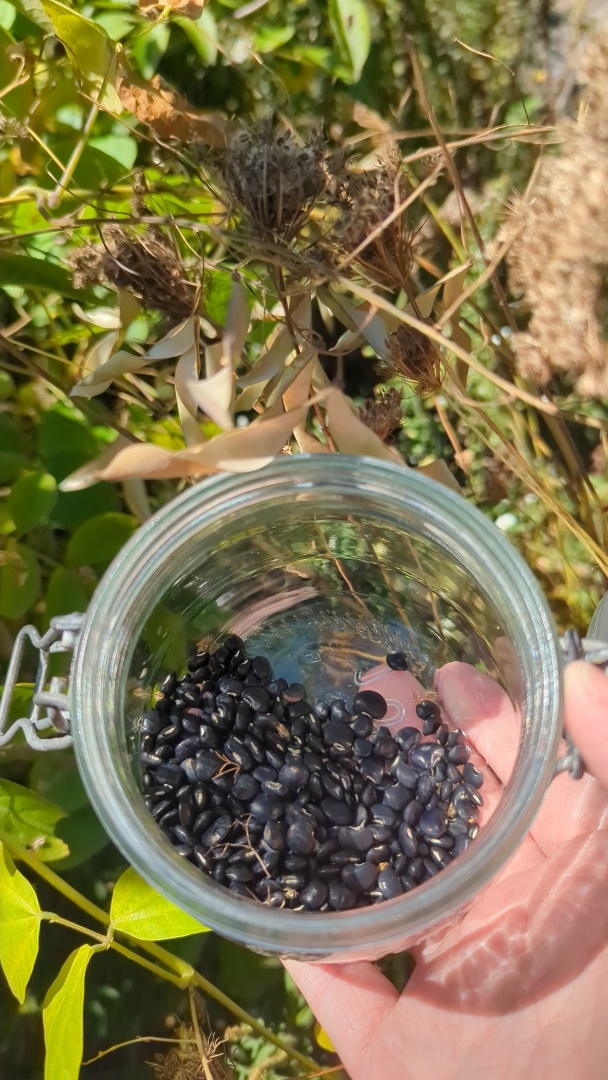
- Soak the beans, for 24 hours, in water with salt and finely sifted wood ash. Baking soda would probably suffice. Change out the liquid every 8 hours. You'll notice that some of the beans begin to plump up and lighten in color. Their extremely tough seed coats have been penetrated.
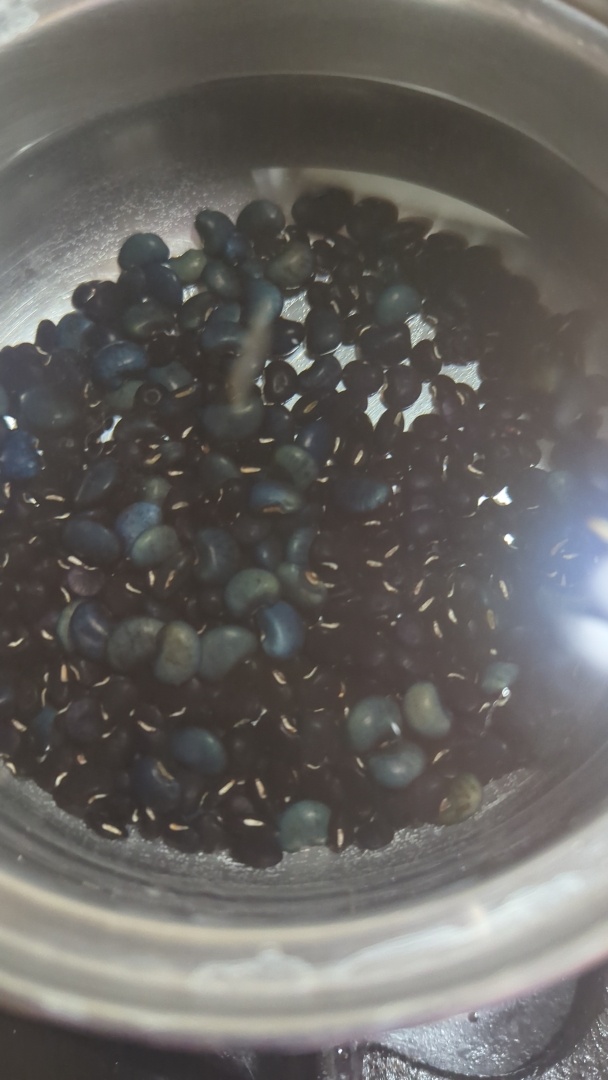
- Boil the beans in a fresh change of water (no ash this time, just salt) for 30 minutes. They're even more, and more of them, light and plump now. If you inadvisably taste them at this stage, they'll be bitter. This is an indicator of various toxins still present.
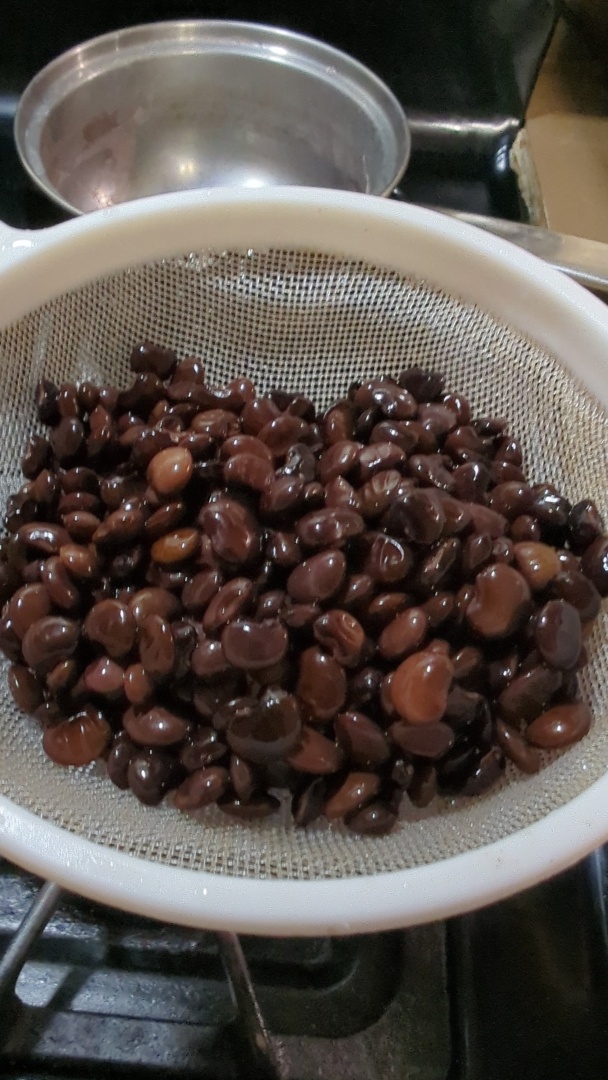
- Pressure cook the beans in another change of salty water for another half hour. At this stage they should all look pretty much alike, and very much like kidney beans. They should have skins with just a bit of bite, creamy interiors, and they should not be bitter at all!
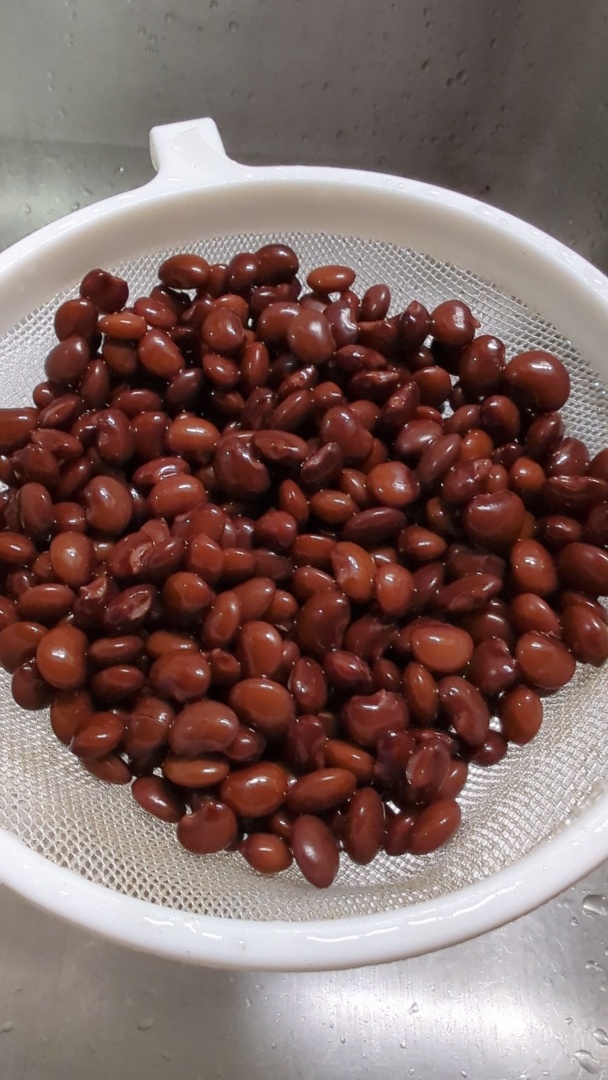
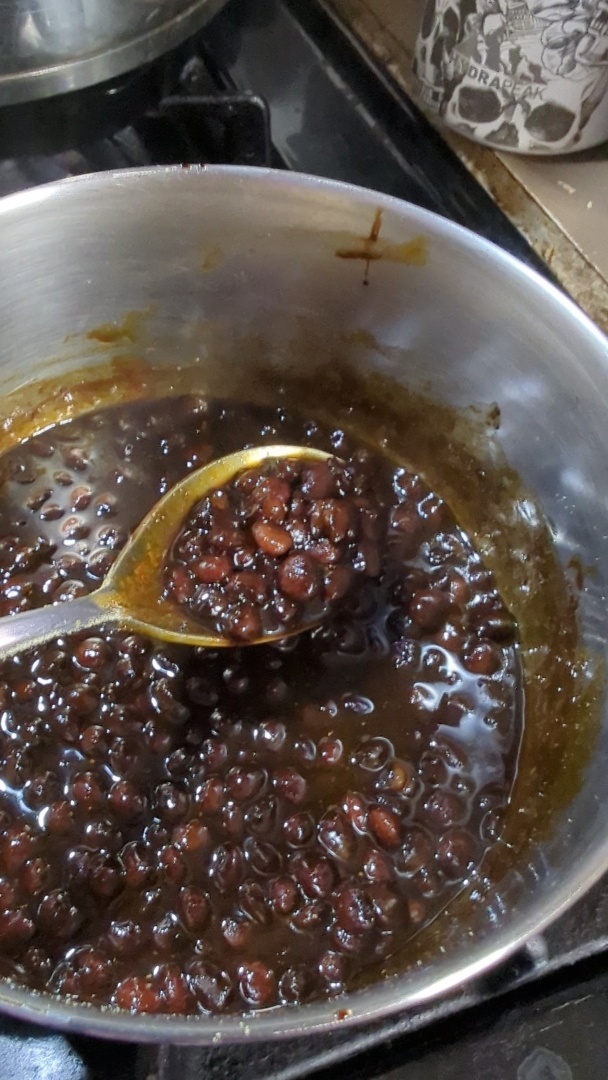
Now just include them in your cooking however you would use canned beans. I made some faux “baked bean” sort of thing.
Notes:
Make sure you use a LOT of water each step! It takes a lot to leach all the bad stuff out. You'd think all this intense processing would reduce them to absolute mush, right? Luckily (or unluckily) the skins are easily tough enough to withstand all this pretty intact. Even if you release your pressure cooker's pressure really fast.
